Jamia Masjid
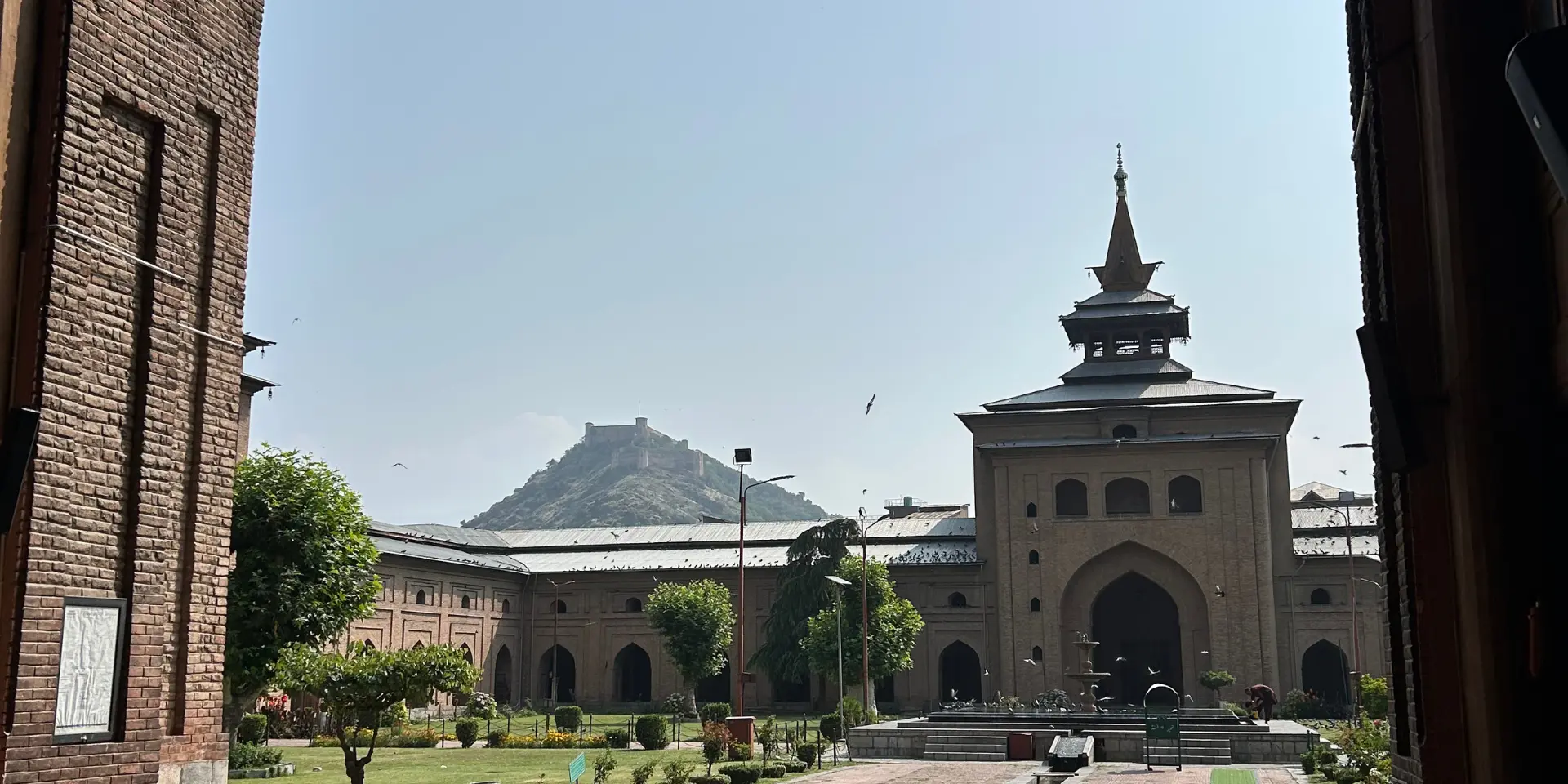
In the age-worn streets of Nowhatta, Old Srinagar, where ancient chinars cast slow-moving shadows on narrow stone pathways and the fragrance of noon bread (lavasa) wafts from the neighborhood bakeries, stands a mosque that holds the soul of Kashmir in its cedar bones: Jamia Masjid. With its majestic wooden pillars, spacious courtyard, and timeless energy, the mosque is not merely a structure of prayer, but a symbol of identity, resistance, resilience, and unity.
A Shrine Born From a Vision: The Foundation of Jamia Masjid
The story of Jamia Masjid begins in 1394 CE, when Sultan Sikandar, a ruler of the Shah Mir dynasty, envisioned a central mosque that would reflect the spiritual awakening brought by the arrival of Shah-e-Hamdan (RA) and his son Mir Mohammad Hamadani. The elder saint had already laid the foundation of Islamic thought and Sufi practices in Kashmir through compassion, art, and education not conquest.
His son, Mir Mohammad Hamadani, helped guide the construction of the mosque, ensuring that it not only followed Islamic principles but also embraced Kashmir’s native artistry and architectural language. Thus, Jamia Masjid became a spiritual and cultural declaration rooted in faith, shaped by Sufism, and infused with the aesthetics of the valley.
Architecture That Breathes with the Valley
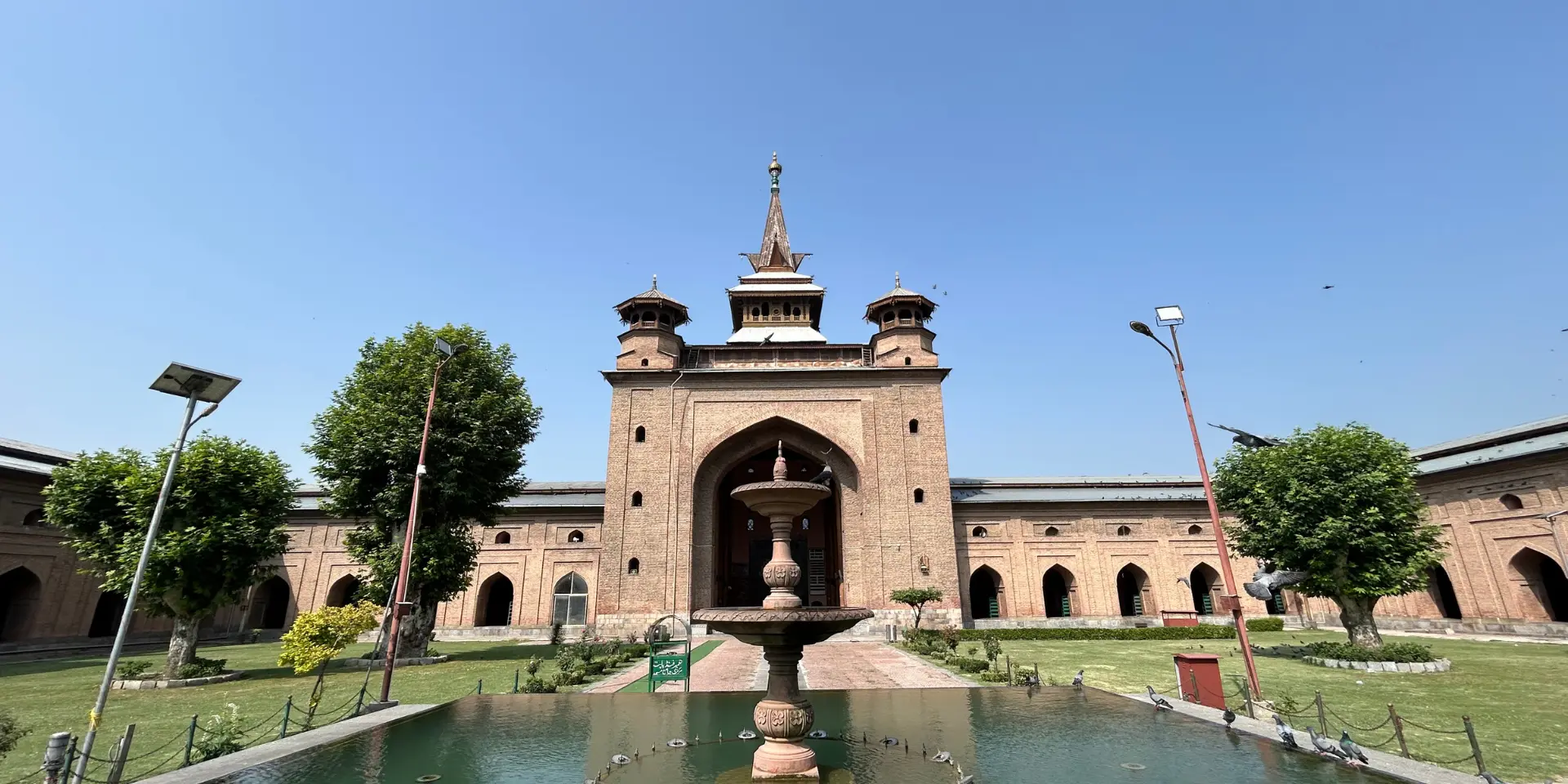
Unlike grand Mughal mosques made from red sandstone or marble, Jamia Masjid is a wooden wonder, built entirely from native deodar (Himalayan cedar). This wood, revered for its strength and scent, forms the skeletal and soulful heart of the mosque.
The mosque has a sprawling square layout, centered around a large open-air courtyard used for communal prayer and reflection. At the heart of this courtyard lies a serene ablution pool (wuzu khana), where worshippers perform ritual washing before prayers—a tranquil feature that enhances the spiritual rhythm of the space.
The courtyard is bordered on all sides by arched halls and walkways supported by a stunning 378 wooden columns each one crafted with meticulous care, varying slightly in texture and grain as though they carry distinct personalities.
The mosque is accessible through four grand entrances, one on each side, symbolizing openness and welcoming worshippers from all directions a reflection of its central role in the spiritual and social life of Srinagar.
At each corner of the mosque stands a pyramidal minaret, designed in a traditional Kashmiri pagoda style, influenced by ancient Buddhist temples that once populated the region. The steep, sloping roofs, multi-tiered cornices, and elegant eaves give the mosque a distinctly local flavor unique not only in India but in the wider Islamic world.
The khatamband ceiling work, a painstaking form of geometric wood carving done without nails, speaks of a time when architecture was a form of devotion. Every inch of the mosque whispers of hand-done labor, artistic pride, and spiritual intent.
A Mosque of Many Lives: Fires, Rebirths, and Renewal
Jamia Masjid has been tested by time and tragedy. It has burned down four times in 1479, 1503, 1620, and again during the Dogra regime but each time, the people of Srinagar have risen in solidarity to restore it. The mosque is not just a religious structure, but a collective memory, a shared identity, a part of everyone who has ever walked its corridors.
In times of political turmoil and natural disasters, Jamia Masjid has often stood as both a sanctuary and a symbol. The echoes of azan (call to prayer) have merged with the cries for justice, remembrance, and peace. The mosque is not just about the Divine, it is also about dignity, endurance, and dialogue.
A Living Campus of Faith and Community

For centuries, Jamia Masjid has been more than a place of prayer. It was once the largest center of Islamic learning in Kashmir, where scholars, imams, jurists, and common citizens debated Shariah, ethics, community disputes, and the principles of good governance. Education, charity, and spiritual introspection all flourished within these wooden walls.
Even today, the Friday congregational prayer (Jumu’ah) gathers thousands of worshippers. The sea of people standing shoulder-to-shoulder under the sky or inside the vast prayer halls creates a powerful spiritual energy that lingers long after the prayer ends. During Eid, Ramadan, or moments of collective mourning or joy, the mosque becomes the center of Kashmir’s emotional and spiritual landscape.
Jamia Masjid as a Symbol of Kashmiri Identity
There’s a reason why Jamia Masjid is not merely a mosque it is a movement. For centuries, it has been at the forefront of Kashmiri consciousness. In the face of invasions, regimes, and modern-day disruptions, the mosque has remained a quiet yet powerful resistance of the spirit.
Its silence has spoken louder than shouts. Its locked gates during curfews have often told the world that something deeper than politics is at stake something tied to faith, culture, and freedom of thought. In the rhythm of everyday life and the pauses of political resistance, Jamia Masjid stands unmoved, proud, and timeless.
Travel Tips for Visiting Jamia Masjid
- Located in Nowhatta, Old Srinagar easily reachable by rickshaw, on foot, or local transport. Best visited in the morning or just after Zuhr (afternoon) prayers for a quieter experience, though there is no restriction on timing, you can visit at any time.
- Dress modestly women should carry a headscarf or shawl.
- Photography of the interior may be restricted always ask for permission.
- Stroll through the heritage alleys nearby to explore traditional bakeries and experience the bustling Jamia Market, a well-known shopping hub in Srinagar. From young girls to elderly women and men too everyone can find something here, with shops offering clothing, accessories, and daily essentials. The market adds a vibrant cultural flavor to your visit and is a must-see when planning a trip to Jamia Masjid.
Final Reflection: A Mosque That Holds More Than Prayer
Jamia Masjid is not just a destination. It’s not even just a mosque. It is a living memory, a pulse of the city, and a breath of Kashmir’s soul. It holds within it centuries of devotion, resistance, beauty, and belief. From its hand-carved cedar pillars to the faithful who fill its courtyard each week, everything about this mosque whispers of endurance, dignity, and divine love.
To walk into Jamia Masjid is to walk into a living manuscript one written in silence, recited in prayer, and preserved in the heartbeats of a people who continue to stand tall like its pillars: deeply rooted and reaching ever skyward.
Looking to explore the soul of Kashmir beyond the tourist trails? Join Wildfloc’s Downtown Heritage Tours, Sufi Trails, and Craft Walks to experience Srinagar like never before.
Click here to explore Downtown Tour with Wildfloc