Hari Parbat

Nestled in the heart of Srinagar, Hari Parbat is not just a hill; it’s a silent sentinel that has witnessed centuries of Kashmir’s evolution—politically, spiritually, and culturally. Also known as Koh-e-Maran, this sacred elevation holds deep-rooted importance across Hinduism, Islam, and Sikhism, symbolizing the age-old spirit of Kashmiriyat—a cultural ethos of unity in diversity. The Hari Parbat Fort, sitting proudly atop the hill, not only offers panoramic views of Dal Lake and Srinagar’s old city, but also tells a tale of empires, saints, and legends.
The Significance of Hari Parbat
A Sacred Site for Multiple Faiths
What makes Hari Parbat exceptional is its embodiment of communal harmony. It is one of the few places in India where sacred spaces of three major faiths share the same geography in peaceful coexistence:
- Sharika Devi Temple (Hinduism): Perched on the western slope, this temple is dedicated to Goddess Sharika, an 18-armed form of Durga. According to the Nilamata Purana, the goddess assumed the form of a mynah bird (Haer) and dropped a pebble onto the demon Jalodbhava, which then grew into Hari Parbat, trapping the demon beneath. The temple features a natural rock Sri Chakra and 108 sacred steps—symbolizing spiritual ascent.
- Makhdoom Sahib Shrine (Islam): Located on the southern side, this two-story shrine honors Sheikh Hamza Makhdoom, a 16th-century Sufi saint who preached spirituality and social justice. The shrine, adorned with Kashmiri woodwork and Mughal arches, is one of the most visited Islamic sites in the Valley. Thousands visit every week, seeking blessings and healing through the saint’s intercession.
- Gurdwara Chatti Patshahi (Sikhism): Near the Kathi Darwaza, this gurdwara marks the visit of Guru Har Gobind Sahib, the sixth Sikh Guru, to Kashmir in the early 17th century. A sacred spring still flows at the site, believed to have been miraculously created by the Guru to serve the people of the region.
Together, these religious sites make Hari Parbat not just a place of pilgrimage but a living symbol of pluralism and interfaith respect.
Hari Parbat Fort: A Glimpse into Kashmir’s Layered History
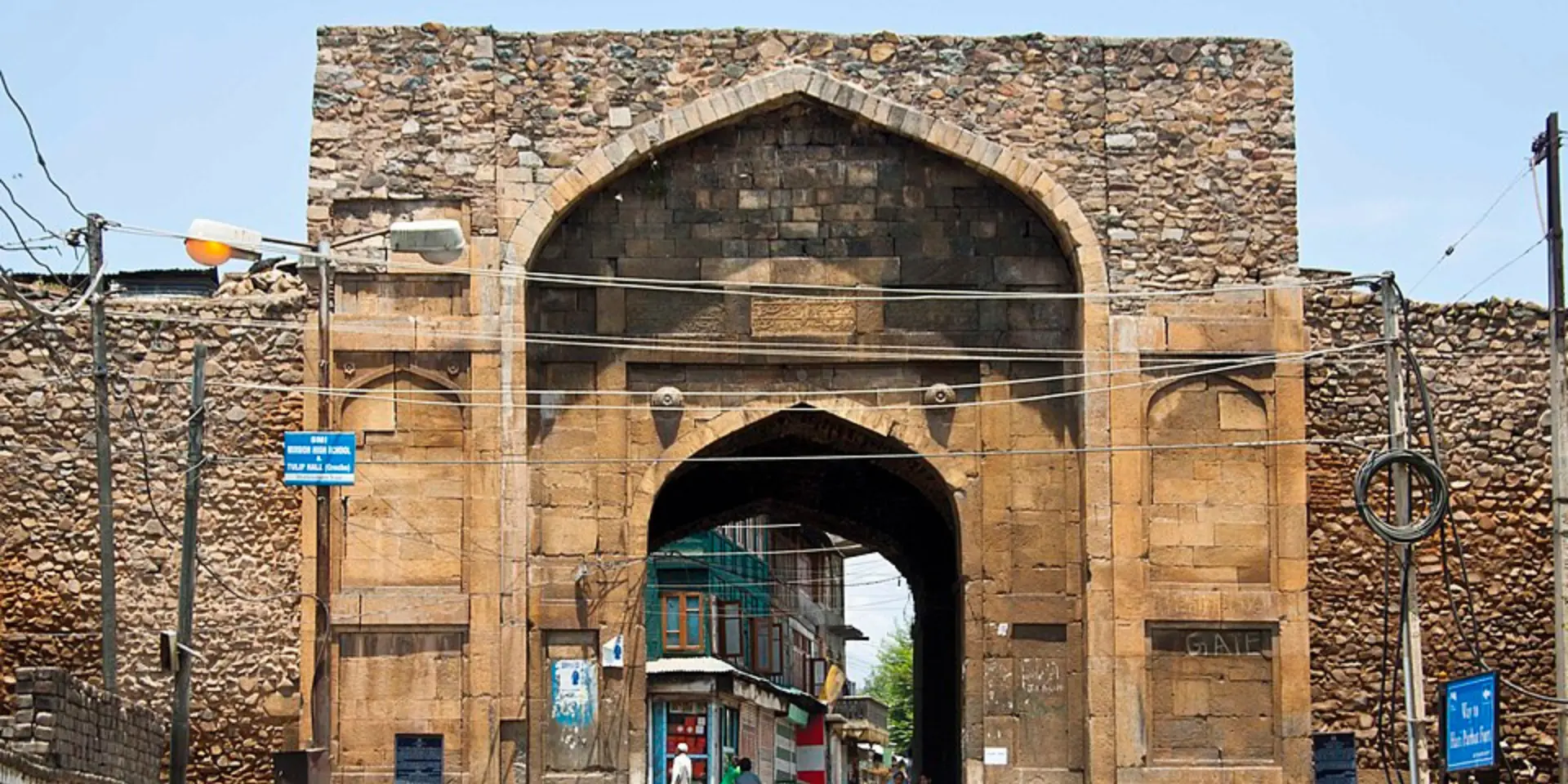
The Hari Parbat Fort that crowns the hill is a fusion of Mughal vision and Afghan execution. The foundation of the fort’s outer walls was laid by Emperor Akbar in 1590, who envisioned a new capital city, Nagar Nagor, surrounding the hill. He constructed massive defensive walls of grey limestone—a rarity in Kashmiri architecture, which traditionally favored wood. However, political priorities shifted, and the Mughal fort remained incomplete.
In the early 19th century, under Durrani rule, Governor Atta Muhammad Khan fortified the hilltop with a rugged, defensive stronghold—built with coarse stone and lime mortar. Unlike Mughal elegance, this fort was utilitarian, featuring narrow passages, lookout bastions, and military chambers designed for defense. According to local folklore, there is even a sealed tunnel beneath the fort, believed to lead toward Pokhribal Lake, hinting at the military secrecy of the past.
Two grand entrances still stand today:
- Kathi Darwaza, with its Persian inscriptions and lotus motifs, served as the main ceremonial gateway.
- Sangeen Darwaza, on the western slope, features twin staircases and fluted archways—each telling a story of bygone imperial ambition.
The fort is now maintained by the Archaeological Survey of India (ASI) and guarded by the Central Reserve Police Force (CRPF). A 100-foot-high national flag, hoisted in 2021, waves proudly at its peak, signifying both cultural pride and geopolitical relevance.
Why You Should Visit Hari Parbat
- Stunning Views of Srinagar
From the summit of Hari Parbat, the aerial view of Srinagar is nothing short of magical. The shimmering Dal Lake, the terraced rooftops of the old city, the lush gardens, and the Zabarwan Mountains in the distance create a 360-degree spectacle that stirs both awe and peace.
- Cultural and Religious Diversity
Hari Parbat is a rare microcosm where spirituality and secularism walk hand in hand. Within a single perimeter, you can explore Hindu, Muslim, and Sikh religious heritage—each site authentically preserved and actively practiced. It’s a perfect place for travelers interested in interfaith dialogue, anthropology, or living cultural heritage.
- Photography and Nature Walks
The hill is surrounded by almond orchards, especially vibrant in spring when blossoms turn the hillside into a pink-and-white paradise. The Mughal gardens, stone walls, shrines, and old stairways make it a photographer’s dream and a walker’s delight.
Best Time to Visit Hari Parbat
The most enchanting time to visit is between March and October, particularly March to April, when almond trees bloom and the valley feels like a canvas of soft pastel colors. Autumn (September–October) is also lovely, with golden foliage and crisp mountain air.
How to Reach Hari Parbat

Hari Parbat is about 5 km from Srinagar’s city center and is easily accessible by:
- Taxi or auto-rickshaw
- A scenic walk if you’re staying in Rainawari or Khanyar
Entry Note: Access to the Hari Parbat Fort may require prior permission from the Archaeological Survey of India (ASI), especially for non-locals. Carry a valid ID for smooth entry.
Travel Tips for Visiting Hari Parbat
- Dress Modestly: Respect the sanctity of all religious spaces.
- Carry ID Proof: Especially needed to access the fort and military-controlled zones.
- Wear Comfortable Shoes: Expect some stair climbing and uneven paths.
Conclusion: A Living Chapter of Kashmir’s Heritage
Hari Parbat is not just a landmark—it is a living storybook of Kashmir. It weaves together mythology, Mughal ambition, Sufi wisdom, Sikh compassion, and local reverence into a sacred landscape that speaks to both the ancient and the modern. Whether you’re a history enthusiast, spiritual seeker, or culture lover, visiting Hari Parbat is an experience that will stay etched in your memory and heart.
Looking to explore the soul of Kashmir beyond the tourist trails? Join Wildfloc’s Downtown Heritage Tours, Sufi Trails, and Craft Walks to experience Srinagar like never before.
Click here to explore Downtown Tour with Wildfloc