Dastigeer Sahab

Dastigeer Sahab is one of the most cherished and spiritually significant figures in the cultural and religious fabric of Kashmir. Deeply rooted in Sufi mysticism, his influence transcends time, touching the hearts of countless devotees across generations. Whether you are a believer, a historian, or a curious traveler, understanding the role of Dastigeer Sahab in Kashmir offers a profound insight into the region’s spiritual heritage.
Who Was Dastigeer Sahab?
Dastigeer Sahab is the local title for Sheikh Abdul Qadir Gilani (RA), a towering Sufi saint of the 11th–12th century, born in Gilan, Persia (modern-day Iran) and based in Baghdad, Iraq. His full name was Abdul Qadir al-Jilani, and he is also known as Ghaus-ul-Azam, meaning “the supreme helper”.
He was the founder of the Qadiri Sufi order, which became one of the most influential spiritual paths in the Islamic world. Though he never visited Kashmir in his lifetime, his teachings were brought to the valley by his spiritual descendants and the early Sufi missionaries of the Qadiri order. The title “Dastigeer”, meaning “the one who helps in distress”, was given to him by followers because of his miraculous spiritual assistance and deep compassion for humanity.
The Legacy of Dastigeer Sahab in Kashmir
The teachings of Sheikh Abdul Qadir Gilani reached Kashmir around the 15th century, brought by Sufi saints and scholars who were devoted to the Qadiri Silsila. Over time, his spiritual philosophy—based on love, humility, service, and the remembrance of God (dhikr)—deeply influenced Kashmiri society.
The people of the valley began to revere him as Dastigeer Sahab, and eventually, shrines were established in his honor. His teachings emphasized:
- Inner purification (Tazkiyah)
- Charity and compassion
- Spiritual discipline
- Unity of mankind and tolerance
These teachings seamlessly blended with Kashmir’s own tradition of mysticism, making Dastigeer Sahab a cornerstone of the region’s religious identity.
The Dastigeer Sahab Shrine in Khanyar, Srinagar
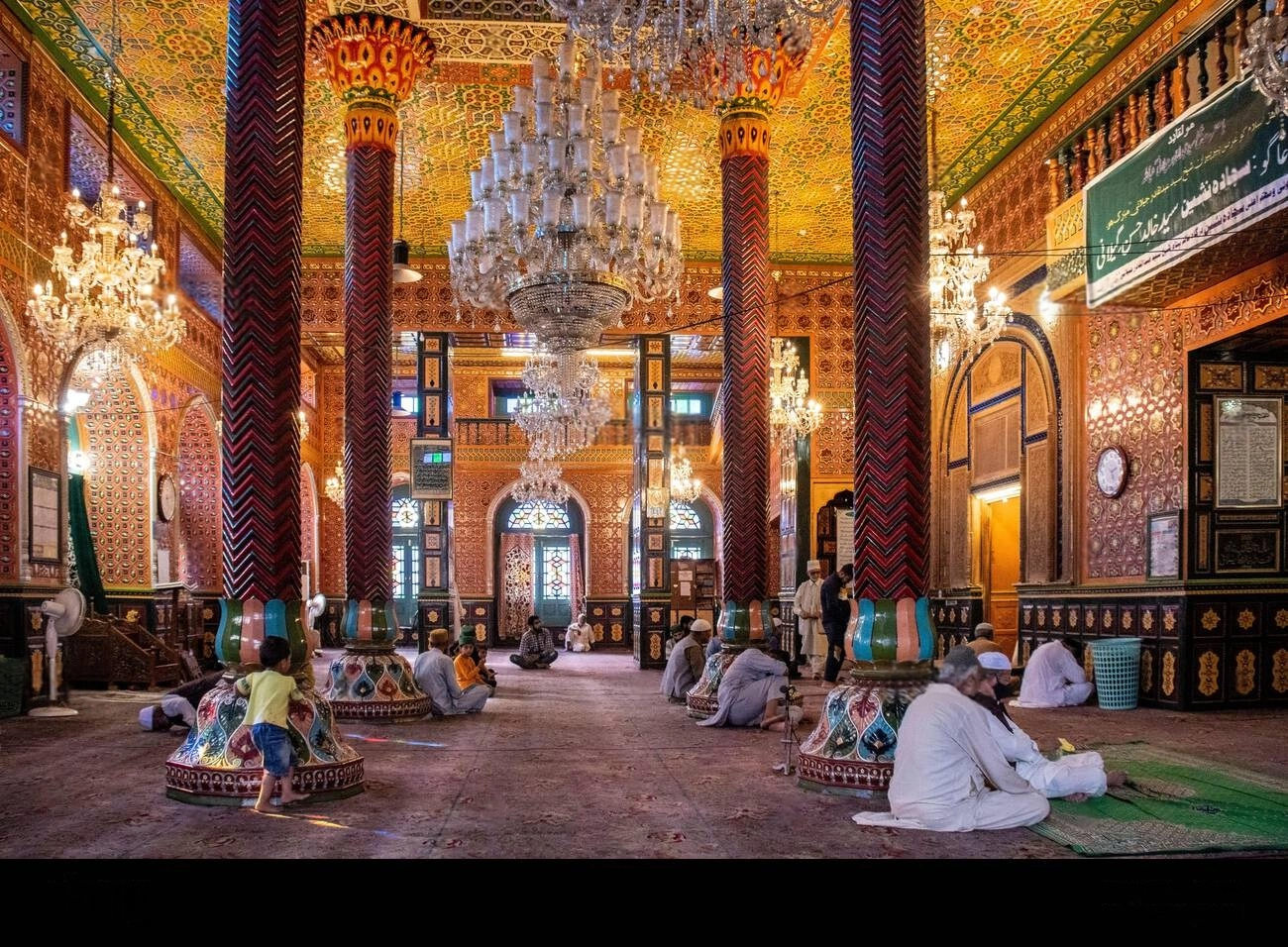
Located in Khanyar, a historic neighborhood in Old Srinagar, the Dastigeer Sahab Shrine (Ziyarat-e-Dastigeer Sahib) stands as one of the most significant Sufi shrines in Kashmir. It is believed to house a sacred relic—a hair strand of Dastigeer Sahab—making it a deeply revered site.
Architectural Beauty
The shrine is known for its traditional Kashmiri wooden architecture, featuring:
- Intricate khatamband (wooden ceiling patterns)
- Papier-mache decorations
- Mughal-era chandeliers
- Calligraphic inscriptions of Quranic verses
Despite suffering extensive damage in a tragic fire in June 2012, the shrine was meticulously restored, preserving its original charm and architectural authenticity. A second shrine dedicated to Dastigeer Sahab is located in Sarai Bala, closer to the commercial heart of Srinagar.
Annual Urs Celebration of Dastigeer Sahab
The Urs Mubarak of Dastigeer Sahab is celebrated every year on the 11th of Rabi al-Thani, marking the saint’s passing and his spiritual union with the Divine.
During the Urs:
- The relic (Mou-e-Mubarak) of Dastigeer Sahab is displayed to the public.
- Thousands gather to perform special prayers and participate in night-long dhikr (remembrance of Allah).
- Renowned scholars and spiritual leaders deliver sermons on the saint’s life and teachings.
- The shrine and its surroundings are beautifully illuminated.
- Langars (free community meals) are served to all, upholding the values of generosity and equality.
The atmosphere during Urs is deeply spiritual, reverent, and emotionally charged, making it one of the most important religious events in Kashmir.
Why Dastigeer Sahab Remains Spiritually Relevant Today

In today’s world, where people face anxiety, conflict, and spiritual emptiness, the teachings of Dastigeer Sahab offer timeless guidance. His philosophy continues to inspire:
- Spiritual seekers looking for meaning and inner peace
- Social workers striving to help the poor and oppressed
- Scholars interested in the development of Islamic mysticism
- Common people who draw comfort and courage from his name
By emphasizing love over hatred, unity over division, and simplicity over extravagance, Dastigeer Sahab’s legacy remains a lighthouse for the soul in an increasingly turbulent world.
Tips for Visiting the Dastigeer Sahab Shrine
If you are planning a visit, here are some helpful tips:
- Dress modestly: Traditional attire is recommended to show respect.
- Visit during Urs: The spiritual energy and community participation are at their peak during this time.
- Be mindful of local customs: Silence and reverence inside the shrine are appreciated.
- Explore the area: The Khanyar neighborhood offers traditional Kashmiri markets and food, adding to your cultural experience.
Conclusion: A Living Legacy
Dastigeer Sahab is more than a historical figure—he is a living spiritual presence in Kashmir. His shrines are not just places of worship; they are spiritual sanctuaries where hearts are healed, prayers are answered, and souls are uplifted.
From the deeply personal prayers whispered within the wooden walls of the shrine to the collective celebrations of Urs, the legacy of Dastigeer Sahab continues to bind generations of Kashmiris through faith, hope, and love.
Looking to explore the soul of Kashmir beyond the tourist trails? Join Wildfloc’s Downtown Heritage Tours, Sufi Trails, and Craft Walks to experience Srinagar like never before.
Click here to explore Downtown Tour with Wildfloc